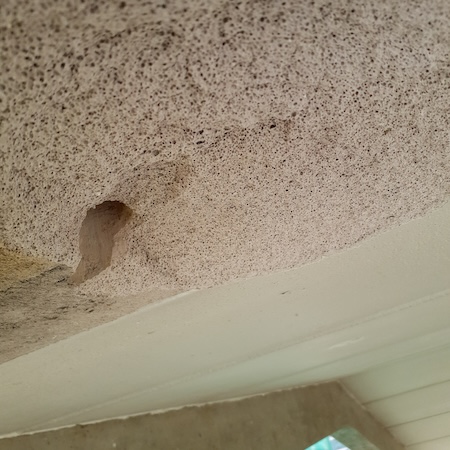
In its latest report on the New Hospital Programme (NHP), the Public Accounts Committee (PAC) is calling for an annual report to Parliament on the progress of replacing Reinforced Autoclaved Aerated Concrete (RAAC) hospitals, with details of any cost increases, delays and the impact from such timetable slippages on the risk to staff and patients. The PAC is also calling for a strategy for capital investment in NHS assets.
A 2022 independent report recommended that RAAC hospitals should be replaced by 2030 at the latest, while a 2025 report concluded that they could stay operational past 2030 but with significant risk and cost.
The government’s new timetable has final RAAC replacement schemes due to finish in 2033. This is two to three years later than originally planned.
Government has already spent £500m on maintenance and mitigations to ensure patient and staff safety for RAAC hospitals, with the PAC’s inquiry told that Trusts with RAAC hospitals will receive a further £440m. However, the PAC also received evidence highlighting that such maintenance reduces risk in RAAC hospitals, but cannot remove it where RAAC planks are inaccessible. Between 1% and 6% of RAAC planks are inaccessible at each RAAC hospital.
The PAC is calling on government to learn the lessons from RAAC around the importance of investing in the NHS estate in a timely manner, and to publish a strategy for investing in NHS capital assets.
The cost of delays
The PAC’s report into the programme raises the significant risk that the massive programme will fall further behind. Government plans to spend £8.9bn between now and 2029-30 as it works on the next wave of the NHP. The Department for Health and Social Care (DHSC) has set aside very little contingency funding for the 2025-26 to 2029-30 period – only 3% of total funding compared to a total contingency of 21%. If the NHP faces unexpected cost increases in the next few years, the report warns there is very little buffer to absorb these, with knock-on delays to subsequent hospitals likely.
Design and capacity concerns
Hospitals in the NHP will be delivered to the new and unproven Hospital 2.0 design, about which the PAC raised concerns in 2023. A key aspect of Hospital 2.0 is wards consisting of solely single bedrooms, which DHSC expects will result in fewer infections and shorter stays.
However, the PAC believes DHSC has not focused enough on the unexpected downsides of 100% single bedroom wards. Some patients, particularly those who are frailer or more vulnerable, may feel alienated being alone and monitored remotely. NHS providers also told the PAC’s inquiry that Trusts were concerned about future financial pressures as a result of operating the new hospitals.
NHS England has acknowledged that staff may find it harder initially to observe patients in single rooms, with necessary extra checks potentially resulting in higher costs in the short term until staff are used to working in a different way, using digital information.
The PAC’s report calls for government to explain how it expects the new design to lead to measurable benefits for patients, and to allow an independent assessment of whether the benefits are being realised following the opening of the first hospitals.
There are also questions as to why bed capacity for hospitals in the NHP needs to increase by 6%, when government has also committed to spending more on care outside hospitals relative to what it spends in hospitals.
DHSC has not yet developed a convincing rationale for the proposed size of new hospitals, and government must show how each individual scheme has taken expected changes to community care into account when deciding bed numbers.
Sir Geoffrey Clifton-Brown, Chair of the Public Accounts Committee, says: “Every year that sees delays to the replacement of RAAC hospitals is a year of borrowed time. This is time borrowed at the expense of the safety of patients and staff, and from the taxpayer in the costs of mitigation and maintenance.”
He adds: "We will continue to monitor hospital building programmes around the world and to see what lessons can be learned for our own – government should do the same. RAAC itself is a hard lesson in overall NHS estate management and investment. We hope that government begins to show more signs of learning these lessons.”