New analysis of NHS England data on the length of time children spend in hospital by the Children’s Commissioner Dame Rachel de Souza, has for the first time identified the system barriers delaying the discharge of children from hospital, causing them to miss out on family life, education and everyday childhood experiences.
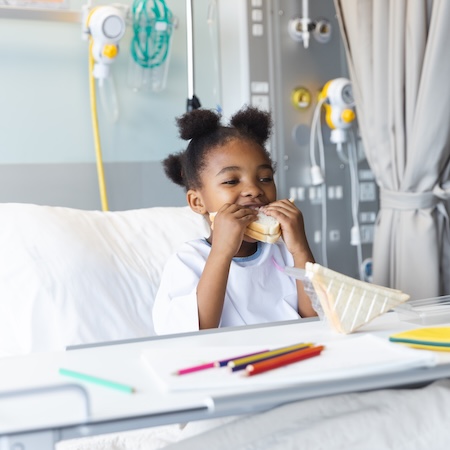
Whilst the report delves into the reasons for delayed discharge and suggests solutions, it also makes recommendations for improving the experience of children in hospital – particularly long-stay patients – around the physical environment, the provision of adequate facilities for children including embedding play in care, and improved facilities for parents including access to essentials, such as food and toiletries.
Children’s services face similar issues to those for adults when it comes to delayed discharge of care, such as failings in children’s social care, housing, education and home nursing, which, the report says, have not kept pace with the medical advancements that would enable more children with complex or life-limiting conditions to live longer and more sustaining lives. As a result, children who are medically ready to leave are often left waiting in limbo, forced to remain on hospital wards for prolonged periods whilst agencies try to arrange the care they need, increasing pressure on NHS services and wards.
Physical environment
“We’re on the ground floor with barely [any] natural light, because it’s just buildings all around, they haven’t got access to a playroom because they’ve all got flu,” a specialist, long-term ventilation nurse tells the report.
The ward environment for children can be traumatic – surrounded by other ill children and their families. The additional risk of children becoming more unwell from infections is a particular problem for the immunosuppressed who may need to be isolated to protect them from illness.
Families and professionals alike cite the importance of play and activities, where possible, for children with long hospital stays. Examples include accessible in-hospital cinemas, enabling children’s dogs to visit them on the ward and efforts to support children to leave hospital on trips.
The report highlights that: “… children’s experience often involved empty hours spent on a ward.”
Embedding play
Play is not seen as a priority because it is not a medical need, however, hospital leaders told the report that it is an aspect of care that they view as key to children’s health and wellbeing. The role of play goes beyond entertaining children whilst in hospital; play and activities make a significant different to a child’s experience, and play specialists can reduce the level of trauma experienced by children during procedures. There is also an argument that play might save the NHS money by reducing treatment time and need for sedation.
The report recommends that the NHS guidelines for commissioning and designing health play services must be implemented to embed play into children’s healthcare via Integrated Care Boards.
Improved facilities for parents
The government needs to provide schemes which families can access to support them with the additional costs they face due to their child being in hospital long-term. Examples of such support include financial support for travelling to hospital, access to essentials including food and toiletries and a reliable internet connection. This latter is described as “a way to contact services crucial for children’s care and education.”
Sophie’s Legacy
This formal report reinforces some of the issues highlighted by Sophie’s Legacy, the charity founded in memory of 10-year-old Sophie Fairall. Based on Sophie’s own experiences and wishes from her time being treated in hospital, Sophie’s Legacy is campaigning for change:
• Play specialist seven-days a week in hospitals
• Improvements to food for children in hospital
• Parents to be fed when staying with their child
• Health professionals to be trained in childhood cancer
• Increase funding in childhood cancer support.
Earlier this year, Alder Hey Children’s Hospital in Liverpool became the first hospital in the country to fully achieve Sophie’s wishes.