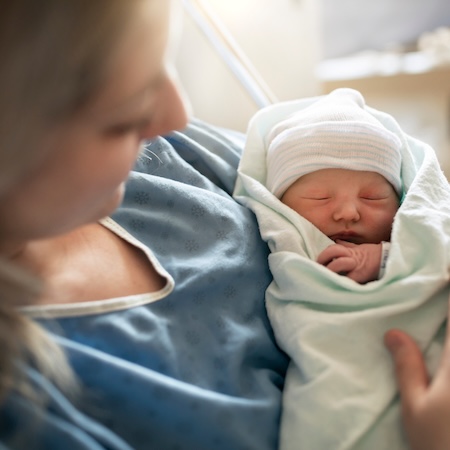
Mothers and newborns across the country will be better protected, as landmark patient safety measure Martha’s Rule will be rolled out to all maternity settings in England, following a string of serious and sustained failures at maternity wards in the Nottingham University Hospitals NHS Trust (NUH).
Donna Ockenden’s review - the largest into maternity and neonatal services in NHS history – published yesterday (Wednesday, June 24, 2026) considered the experiences of maternity care for 2,500 families and found women ignored or complaints dismissed, missed opportunities to identify deteriorating patients and a culture of silencing both junior staff and parents.
Following the publication of the report, the government has committed to rolling out Martha’s Rule across maternity and neonatal wards in England to ensure every parent can request a rapid review from an independent medical team if a baby or mother’s condition is deteriorating and they are concerned this is not being responded to.
Martha’s Rule is already helping transform the culture of the NHS. It has been rolled out for inpatients in every acute hospital in England and has been piloted in 15 maternity and neonatal settings, with rollout to more expected this year.
NHS data shows that there have already been over 2,100 calls to Martha’s Rule requiring changes in a patient’s treatment, with over 600 calls leading to potentially life-saving interventions to transfer them to enhanced levels of care.
The safety initiative is named after Martha Mills, who died in 2021 aged 13 after developing sepsis in hospital, where she had been admitted with a pancreatic injury after falling off her bike.
Martha’s family’s concerns about her deteriorating condition were not responded to, and in 2022 a coroner ruled that Martha would probably have survived had she been moved to intensive care earlier.
Secretary of State for Health and Social Care James Murray says: “Donna Ockenden’s review lays bare a culture where too many voices went unheard, too many opportunities to prevent harm were missed and too many lives were lost. That’s why we have to take action, and quickly.
“No family should ever have to battle the system that is meant to care and protect them. That is why Martha’s Rule is so fundamental. It provides a way for a concerned mum or family member to raise the alarm before it is too late.
“I want families across the country to feel safe when they walk through the doors of their maternity settings. Today marks a step in achieving that - but this is just the beginning.
“I want to thank Donna for her work over the last four years. These clear recommendations will form part of our national plan to deliver real improvements in maternal and neonatal care, in Nottingham and beyond.”
Taking action
Those responsible for failures will now be compelled to give evidence to investigations into failing maternity care to end a culture of secrecy and prevent further harm.
This action will help ensure the reviews in Leeds and Sussex are fair and comprehensive, so that uncovering the truth does not rely solely on those who choose to come forward voluntarily. Those who refuse to do so, or deliberately withhold information about failures, could face up to two years in prison.
The measures are designed to tackle the culture of silence exposed by the Nottingham review, where over 800 staff gave evidence but many described a culture of being silenced by senior clinicians and hospital bosses when raising concerns around patient safety. This will ensure that for both reviews of Sussex and Leeds, staff are heard and families are closer to getting the answers they deserve.
Reports of incidents in mortuaries across the country will also be more tightly reviewed, following the deeply concerning findings about the lack of respect given to deceased babies, and the complete disregard to their dignity. The Human Tissue Authority will require all mortuaries to review internal records dating from 2015 to 2026 to ensure all incidents have been logged and reported. This will strengthen accountability, ensuring concerns cannot be hidden or overlooked.
Donna Ockenden, Chair of the Independent Review, says: “Today, we have started the process of providing answers. We have set out clear findings and essential actions to address the concerns raised by families and staff. These actions when implemented will drive improvement both within perinatal services at Nottingham University Hospitals NHS Trust and across England.”
A national action plan will now be developed through the National Maternity and Neonatal Taskforce, chaired by the Secretary of State, bringing together the findings of this review and Baroness Amos’ report to drive real and lasting change for women and families across the country.